
Eritrea National Day (May 24): History, Celebrations and How to Visit
Everything you need to know about Eritrea National Day on 24 May, its history, how Asmara celebrates Independence Week, and how to plan a trip around it.
What Is Eritrea National Day?
Eritrea National Day, celebrated every year on May 24, marks the moment the Eritrean People's Liberation Front entered Asmara in 1991, ending thirty years of armed struggle and delivering the independence that an entire generation had fought and died for.
For Eritreans both inside the country and scattered across the diaspora, Eritrea National Day on May 24 is the most emotionally charged date on the national calendar. It is a day of gratitude for the fallen, of pride in what survived, and of hope for what is still being built. The formal independence referendum came two years later, in April 1993, 99.8% of the votes cast in a UN-supervised referendum were for sovereignty, and the nation was officially admitted to the United Nations on May 28, 1993. But the heart of the celebration has always been May 24: the day Eritrea took its freedom back.
Today, Eritrea National Day is observed with a full week of events, from the Italian-era boulevards of Asmara to the Red Sea port of Massawa and the highland city of Keren. Eritrea National Day is, without question, the most spectacular time of year to visit the country.
The History Behind Eritrea Independence Day
To understand why Eritrea National Day moves Eritreans to tears, you need to understand the road that led there. Eritrea's path to independence is one of the longest and most costly liberation struggles in African history.
After Italy's defeat in World War II, Eritrea passed under British military administration. In 1952, a United Nations resolution federated Eritrea with Ethiopia. A decade later, in 1962, Ethiopia dissolved the federation entirely and annexed Eritrea as a province, triggering what would become a 30-year armed resistance.
1941–1952: British Administration & Federation
Following Italy's defeat, Eritrea comes under British control before a UN resolution creates a federation with Ethiopia.
1961: Armed Struggle Begins
On 1 September 1961 the Eritrean Liberation Front fires the first shots of the war under Hamid Idris Awate. Ethiopia responds by dissolving the federation and annexing Eritrea outright in 1962. The Eritrean People's Liberation Front emerges from the movement in the early 1970s and goes on to lead the struggle to victory.
1961–1991: Thirty Years of Resistance
Three decades of guerrilla warfare across highlands, deserts, and coastlines. Women comprised approximately 30% of the EPLF fighting force, permanently transforming Eritrean society.
May 24, 1991: Liberation of Asmara
EPLF forces enter and liberate Asmara. Eritreans worldwide pour into the streets. The moment reverberated across the entire continent.
April 1993: Independence Referendum
A UN-supervised referendum returns a near-unanimous vote for sovereignty. On May 28, 1993, Eritrea becomes a fully recognised member state of the United Nations.
Asmara, Africa's forgotten modernist city: Eritrea's capital is a UNESCO World Heritage Site for its extraordinary collection of 1930s Italian Rationalist, Art Deco, and Futurist architecture. Walking Harnet Avenue during Independence Week, past the Cinema Impero, the Fiat Tagliero building, and the Orthodox Cathedral, is like visiting an open-air museum alive with music and national pride. There is nowhere else like it on earth.
How Eritrea Independence Day Is Celebrated
Eritrea National Day is not a single afternoon's event. It is a full week of celebration that Eritreans call qinyat natsnet (Independence Week). Every region participates, but the most spectacular events are concentrated in Asmara. Here is what to expect:
- 01
Candlelight Vigils and Remembrance
Eritrea National Day week opens in solemnity. Vigils across the country honour the martyrs who gave their lives. State broadcaster Eri-TV airs documentary footage from the liberation struggle, a deliberate act of collective memory that anchors the celebrations in historical truth. - 02
Military Parades and Civic Processions
Asmara's wide boulevards transform into parade routes. Military columns, marching bands, veterans' groups, youth organisations, and civilian delegations move through the city. The streets are lined with the green, blue, and red of the Eritrean flag. - 03
Cultural Performances from All Nine Ethnic Groups
Eritrea is home to nine recognised ethnic groups, Tigrinya, Tigre, Saho, Kunama, Rashaida, Bilen, Afar, Beja, and Nara, each with its own language, music, and dance traditions. Eritrea National Day is the one time each year when all nine communities perform publicly side by side, living expression of unity in diversity. - 04
Concerts, Music Festivals, and Traditional Storytelling
Live music fills Asmara's outdoor stages throughout Eritrea National Day week. Tigrinya pop, traditional kirar string music, and contemporary East African sounds fill the air. Oral historians perform in the tradition of the habesha storytelling culture, keeping ancient narratives alive for new generations. - 05
Cycling Races: the Sport of Champions
Eritrea is the cycling powerhouse of Africa, producing world-class riders like Daniel Teklehaimanot and Natnael Tesfatsion. Independence Week features national races that draw enormous crowds and generate some of the most electric atmosphere of the entire celebration. - 06
Street Carnivals, Food Markets, and Tent Parties
Open-air carnivals take over neighbourhoods across the country. Food vendors serve injera with spiced lamb zigini, freshly-caught Red Sea fish, rich lentil tsebhi, tart home-brewed suwa beer and sweet mies honey wine. Tent parties run late into the warm May nights with communal dancing and flag-waving that needs no translation. - 07
Presidential Address to the Nation
President Isaias Afwerki delivers a national address on May 24, congratulating Eritreans at home and in the diaspora, acknowledging the sacrifice of the independence generation, and outlining development priorities for the year ahead.
Join the Eritrea National Day Celebrations
Adulis Travel, a licensed Eritrean tour operator, runs a fully guided six-day Independence Day tour. Letter of Invitation prepared, accommodation booked, local guide included.
Eritrea Martyrs Day: June 20
Inseparable from the joy of Independence Day is the solemnity of Eritrea Martyrs Day, observed every year on June 20. If May 24 is the day Eritrea celebrates what was won, June 20 is the day it honours the price that was paid.

During the 30-year war of liberation from 1961 to 1991, tens of thousands of Eritrean fighters, men and women from every ethnic background and faith, died for their people's sovereignty. Around 65,000 Eritrean fighters are recorded as having fallen, and war-related deaths among civilians ran higher still. The losses touched almost every family in the country.
Government commitment to martyrs' families: Every family of a fallen fighter receives an official certificate of honour bearing the martyr's name, photograph, date of enlistment, and place and date of death. Monthly financial support is also provided. Across Eritrea and in diaspora communities on every continent, June 20 is marked with candlelight vigils and memorial ceremonies.
The pairing of Independence Day and Martyrs Day reflects a national understanding that celebration and remembrance are not opposites. They are two sides of the same truth. One day of joy, one day of memory, both inseparable from each other.
Eritrea National Holidays Calendar
Eritrea's national calendar is shaped by its two major faith traditions, Orthodox Christianity and Islam, alongside its political history. Every public holiday is an opportunity to understand a different dimension of Eritrean culture and society.
Islamic holidays follow the lunar calendar and shift approximately 11 days earlier each Gregorian year. Confirm exact dates before travel.
Eritrea Independence Day Tour: 5-Day Itinerary
Adulis Travel runs a guided tour timed precisely to coincide with the peak of the Eritrea National Day celebrations, combining cultural immersion in Asmara (Eritrea's UNESCO-listed capital) with a coastal excursion to Massawa on the Red Sea. The five-day outline below shows the shape of the trip; our scheduled Independence Day departure runs to six days and adds the highland market city of Keren.
Day 1: Arrival Day - Asmara, First Impressions of "Little Rome"
Arrive at Asmara International Airport (ASM) at 2,325 metres above sea level, the fresh highland air is the first surprise. Your Adulis Travel guide meets you at arrivals. Stroll along Harnet Avenue past the Art Deco Cinema Impero (1937) and the breathtaking Fiat Tagliero building. Settle into one of the historic Italian-style cafés for a macchiato and the finest espresso in East Africa. Dinner: traditional Eritrean injera with zigini at a local restaurant.
Day 2: Day Trip - Asmara to Massawa, Descent to the Red Sea
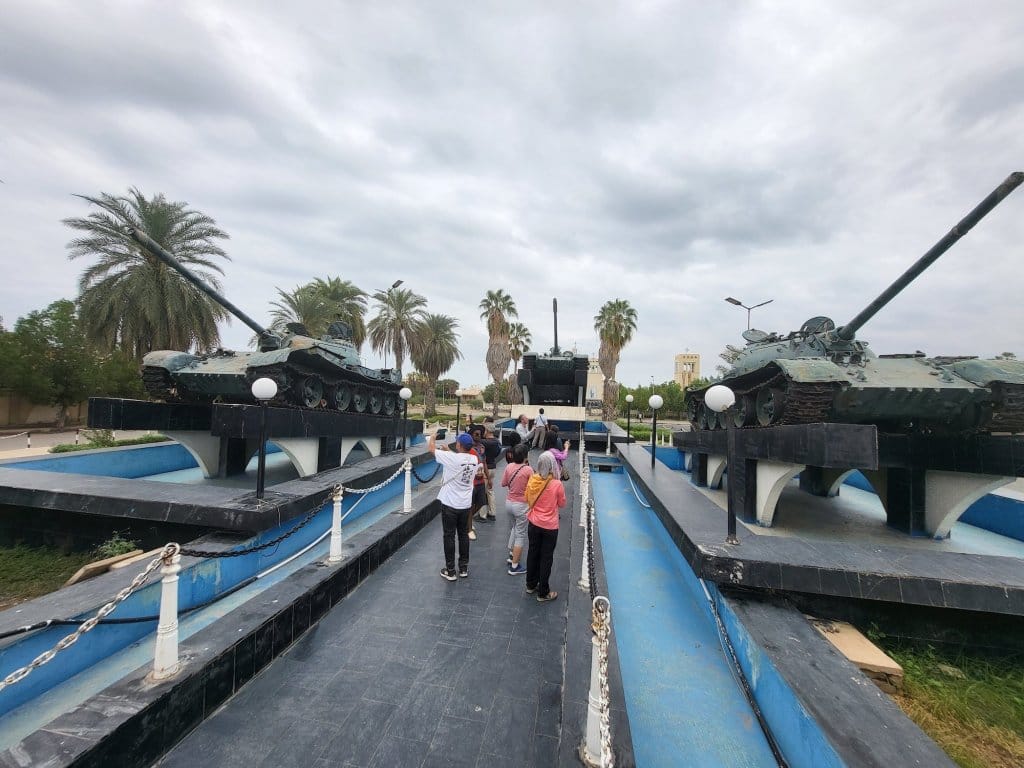
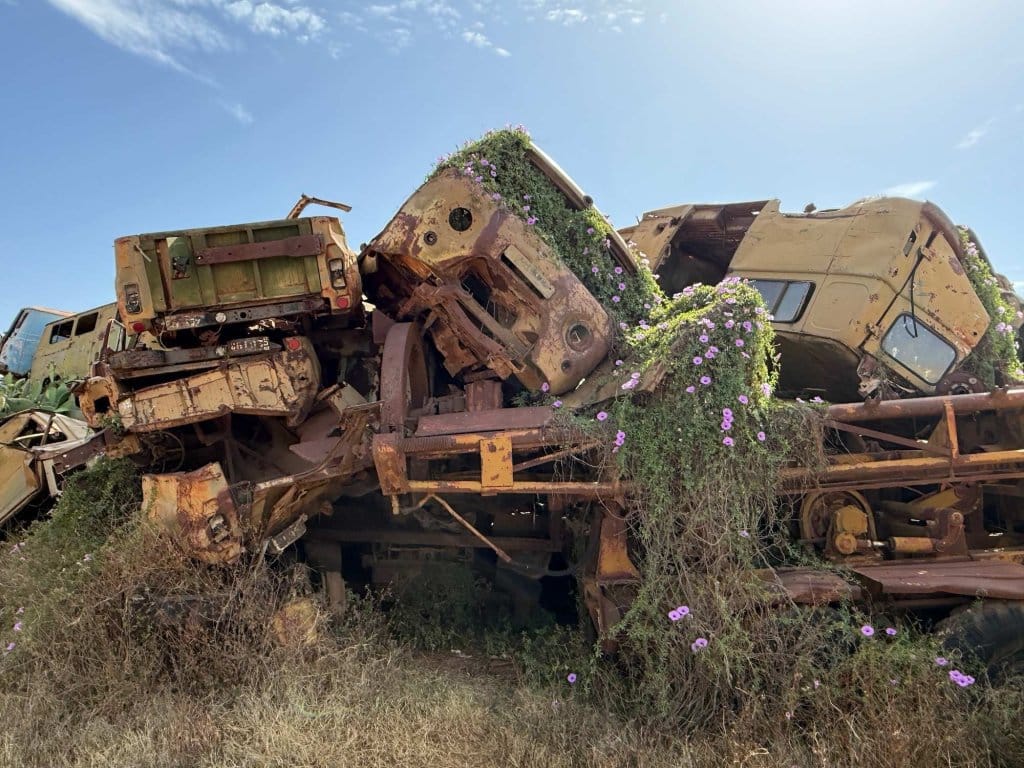
Depart on one of the most spectacular drives in East Africa: the switchback escarpment road that falls from 2,325 metres to sea level in about 110 kilometres. Arrive in Massawa, the ancient Red Sea port known as the "Pearl of the Red Sea." Explore the Ottoman-influenced old town on Massawa Island, visit the Tank Graveyard (a haunting open-air monument to the liberation war), and enjoy fresh Red Sea seafood at a waterfront restaurant.
Day 3: Exploration Day - Asmara in Depth, Markets, Monuments, and History
A full day in Asmara as Independence Week atmosphere builds around you. Morning visit to the Medeber Market, a sprawling recycling bazaar where artisans craft new goods from old materials: sandals from tyres, lamps from tin cans. Continue to the central market for woven textiles, silver jewellery, and coffee ceremony sets. By evening, the city is pulsing with pre-independence energy, flags going up, stages being assembled.
Day 4: Highlight Day - Eritrea National Day, May 24
Eritrea National Day is the day the entire tour builds toward. Wake early, the city is already alive. Your guide takes you to a prime position along the parade route to watch the Independence Day procession: military columns, marching bands, youth groups in traditional dress, veterans of the liberation struggle, and representatives of all nine ethnic communities. Mid-morning: join the cultural festival at Bahti Meskerem Square and the Asmara Expo grounds. Afternoon: food carnival in the city's public gardens. Evening: open-air concerts and fireworks visible across the Asmara plateau. A day you will remember for the rest of your life.
Day 5: Departure Day - Last Morning in Asmara, Farewell
A gentle final morning. Return to any landmark you want to see once more, the Fiat Tagliero in the morning light is particularly special. Final browse through the market for last gifts. Your Adulis Travel guide transfers you to the airport. Until next time, dehna hager.
Visa note: Eritrea requires a tourist visa for almost all nationalities. Adulis Travel prepares your Letter of Invitation (USD 50) in advance; with it, your visa is issued on arrival at Asmara International Airport for USD 70 in cash, USD 120 in total. The visa itself is issued by the Eritrean authorities. A separate travel permit is required for any journey outside Asmara, including the Massawa road; Adulis Travel obtains these for you before you set off. Full visa information →
Why Visit Eritrea for Independence Day?
Eritrea is one of the least-visited countries in Africa, and that is precisely what makes it one of the most rewarding. It has not been shaped for mass tourism. When you arrive for Eritrea National Day, you are a guest at a genuine national celebration, not a spectator at a performance designed for outsiders.
Asmara is a city of constant surprises: wide boulevards lined with jacaranda trees, extraordinary 1930s architecture, a café culture where the espresso rivals anything in Naples, and a pace of life that feels Mediterranean rather than East African. Visitors consistently describe Asmara as calm and easy to explore on foot, and the warmth of its residents as the defining memory of their trip. As anywhere, check your own government's current travel advice before you book.
Beyond Asmara, the Red Sea coast at Massawa and the Dahlak Archipelago offer some of the least-dived and most pristine coral reefs on earth. The ancient ruins of Qohaito and the port of Adulis speak to civilisations stretching back more than two thousand years. Eritrea is a destination of genuine depth, and Eritrea National Day is the single best moment of the year to experience it.
Frequently Asked Questions About Eritrea National Day
When is Eritrea National Day?
Eritrea National Day, also called Eritrea Independence Day, is celebrated every year on May 24. It is an official public holiday. Celebrations typically begin several days earlier and continue for a full seven-day period known as qinyat natsnet (Independence Week). The May 24 date marks the day in 1991 when EPLF forces entered and liberated Asmara, ending thirty years of armed struggle.
What happened on May 24, 1991?
On May 24, 1991, forces of the Eritrean People's Liberation Front (EPLF) defeated the Ethiopian military and took control of Asmara, effectively ending the 30-year liberation war that had begun in 1961. A formal independence referendum followed in April 1993, and Eritrea was officially admitted to the United Nations on May 28, 1993.
How is Eritrea Independence Day celebrated?
The Eritrea National Day celebrations span a full week and include military and civic parades, cultural performances from all nine of Eritrea's ethnic groups, live music concerts, national cycling races, street carnivals, open-air food markets, tent parties, and candlelight vigils in memory of the martyrs. On May 24 itself, the President delivers a national address and major fireworks displays light up Asmara and other cities.
Can tourists visit Eritrea for Independence Day?
Yes, and Eritrea National Day is an extraordinary experience. Eritrea requires a tourist visa. Adulis Travel prepares the Letter of Invitation (USD 50) you need, and with it your visa is issued on arrival at Asmara International Airport for USD 70 in cash, USD 120 in total. The visa itself is issued by the Eritrean authorities. Accommodation fills up very quickly around May 24, so early booking is essential. See full visa details here.
What is Eritrea Martyrs Day?
Eritrea Martyrs Day is observed on June 20 every year. It honours the tens of thousands of fighters who died during the 30-year liberation war from 1961 to 1991. The government provides financial support and official certificates of honour to the families of all fallen fighters. The day is marked with candlelight vigils and memorial ceremonies in Eritrea and in diaspora communities worldwide.
What are the nine ethnic groups of Eritrea?
Eritrea is home to nine officially recognised ethnic groups: Tigrinya (the largest, predominantly in the highlands), Tigre (northern and western lowlands), Saho (eastern escarpment), Kunama (Gash-Barka region), Rashaida (coastal areas), Bilen (Keren region), Afar (southern Red Sea coast), Beja (northern lowlands), and Nara (southwestern lowlands). All nine celebrate Independence Day together.
What is the best time of year to visit Eritrea?
The most comfortable highland climate is from October to March, when temperatures in Asmara are cool (15–25°C). May, while warmer, is the most rewarding month because of the Independence Day celebrations. The best diving season at the Dahlak Archipelago runs from October through May. Avoid the main rainy season (June–September) if possible.
Is Eritrea safe to visit?
Asmara is widely regarded as one of the safest capital cities in East Africa. Street crime is very low, and Eritreans are consistently hospitable to foreign visitors. Adulis Travel handles all permits and logistics, ensuring your trip is smooth from arrival to departure. Always check your government's current travel advisory before booking.
Plan your Eritrea trip with Adulis Travel
Read our complete Eritrea travel guide, browse related Eritrea tours, or request a private quote.
More Eritrea travel guides: Eritrea visa · is Eritrea safe? · attractions · Asmara · Massawa · Danakil · the Eritrean railway.