
Asmara UNESCO World Heritage Site | Eritrea’s Modernist Marvel
Discover Asmara, Africa’s hidden gem of Art Deco and Futurist architecture. Plan your visit with our guide to the Fiat Tagliero, Harnet Avenue, and local culture.
Asmara is the capital city of Eritrea, located in the Horn of Africa at an elevation of 2,325 meters (7,628 feet). Known as "Africa's Miami" or "Piccola Roma" (Little Rome), the city is famous for its well-preserved Italian modernist architecture. In 2017, UNESCO added Asmara to the World Heritage List, and once you visit, you will understand why. This guide covers Asmara's rich history, stunning architecture, local culture, and practical travel tips.
Quick facts about Asmara
Population: ~650,000 | Elevation: 2,325 metres (7,628 ft) | Climate: Mild highland (15-22°C / 59-72°F)
UNESCO status: 2017 | Architecture styles: Futurist, Art Deco, Neoclassical, Romanesque Revival, Rationalist
Nicknames: "Piccola Roma" (Little Rome), "Africa's Miami" | Number of modernist buildings: Over 400
Ancient origins
The area around Asmara has been inhabited for thousands of years. Archaeological evidence suggests that four distinct clans lived in the region. According to local tradition, the women of these clans urged their men to unite against external threats, leading to the name "Arbate Asmara" meaning "the four [villages] are united." Over time, "Arbate" was dropped, and the city became known simply as Asmara.
Asmara History Timeline
c. 800 BC – c. 400 AD
Pre-Aksumite & Aksumite Period: The area was part of the powerful Kingdom of Aksum, one of the great civilizations of the ancient world. Evidence of early settlements has been found at Sembel on the outskirts of the modern city.
1889
Italian Colonization Begins: Italian forces occupied Asmara in 1889, when it was still a small village of about 1,500 inhabitants; the capital of Italian Eritrea was moved here from Massawa in 1897.
1897-1935
Early Italian Development: The first master plan for Asmara was developed, creating the foundation for a modern colonial city. The Eritrean Railway connecting Asmara to the port of Massawa was completed in 1911.
1935-1941
The Great Expansion (Il Piano Regolatore): Asmara's golden age of architecture. Following Mussolini's invasion of Ethiopia, the city became a strategic hub. Italian architects flocked to the city, building over 400 modernist buildings in just six years. By 1939 the population had grown to roughly 98,000, of whom about 53,000 were Italians: for a few years Asmara counted more Italians than many cities in Italy.
1941-1952
British Administration: British forces captured Asmara during World War II. The city remained under British military administration until 1952. Unlike other former Italian colonies, Asmara's buildings were preserved rather than destroyed.
1952-1962
Federation with Ethiopia: Asmara became part of a federation with Ethiopia under Emperor Haile Selassie, with Eritrea maintaining autonomy.
1962-1991
Ethiopian Annexation & War of Independence: Ethiopia annexed Eritrea, triggering a 30-year war for independence. Asmara was heavily militarized but largely spared from destruction. An estimated 65,000 Eritrean fighters were killed, and total deaths on all sides are commonly put at over 150,000.
1991
Liberation: Eritrean forces captured Asmara on May 24, 1991. Independence was officially declared on May 24, 1993, following a UN-supervised referendum.
2017
UNESCO World Heritage Site: On July 8, 2017, UNESCO inscribed "Asmara: A Modernist City of Africa" on the World Heritage List, recognizing the city as an exceptional example of early modernist urban planning and architecture.
Asmara is widely described as one of the calmest capital cities in Africa. The city is often called "the city that time forgot" because its modernist buildings have been preserved almost exactly as they were built in the 1930s. The Fiat Tagliero Building's concrete wings were so daring that the architect famously stood under them with a gun during construction to prevent workers from adding support pillars!
Asmara Architecture
Why Asmara's Architecture is Unique
The capital boasts one of the highest concentrations of modernist architecture anywhere in the world. The city's buildings represent virtually every 20th-century architectural style: Futurist, Art Deco, Novecento, Rationalist, Neoclassical, and even Cubist. Unlike European cities that were bombed during World War II, Asmara's buildings remained intact, creating an unparalleled living museum of early modernist design.

400+ Modernist Buildings at the historic centre
1935-1941 Golden Age of Construction
9 Cinema Theaters
2,325m Elevation (7,628 ft)
- 01
Key Architectural Styles at a Glance
Asmara showcases an extraordinary concentration of early-twentieth-century design. Italian Rationalism, Art Deco, Futurism, Novecento and Neoclassical styles sit side by side, from the streamlined Fiat Tagliero service station to elegant cinemas, hotels and government buildings, which together earned the city its UNESCO World Heritage listing in 2017. - 02
Futurist (Futurismo)
The Futurist movement celebrated speed, technology, and industrial design. Asmara contains the world's finest examples of Futurist architecture, including the iconic Fiat Tagliero Building with its aeroplane-like wings.
- 01Key building:Fiat Tagliero (1938)
- 02Architect:Giuseppe Pettazzi
- 03Features:Aerodynamic forms, dynamic angles, concrete cantilevers
Art Deco
Art Deco is characterized by geometric patterns, rich colors, and lavish ornamentation. The city has dozens of Art Deco buildings, including cinemas, hotels, and private residences.
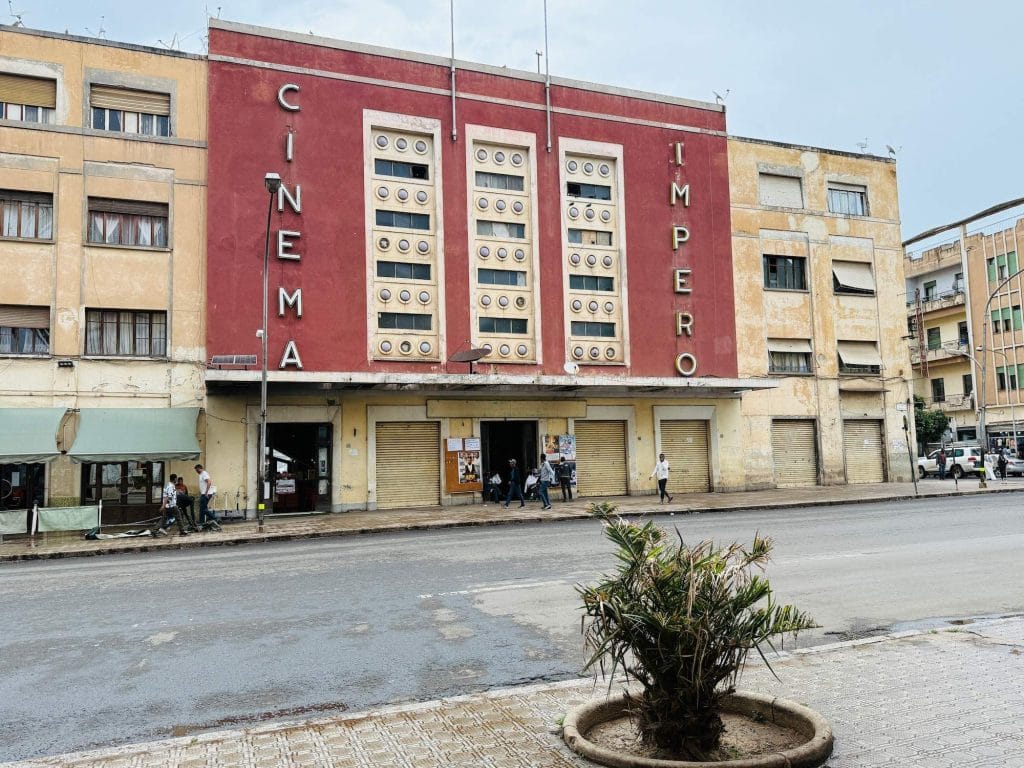
- 01Key building:Cinema Impero (1937)
- 02Features:Geometric motifs, stepped forms, chrome details
- 03Colors:Cream, pastel, terracotta
Neoclassical
Drawing inspiration from ancient Greek and Roman architecture, Asmara's Neoclassical buildings feature grand columns, symmetrical facades, and imposing entrances.
- 01Key building:Asmara Opera House (1918)
- 02Features:Corinthian columns, pediments, domes
- 03Materials:Marble, travertine, limestone
Romanesque Revival
This style revives elements of medieval Romanesque architecture, including rounded arches, thick walls, and decorative arcades at several Asmara landmarks.
- 01Key building:Asmara Opera House (partial)
- 02Features:Round arches, battlements, towers
- 03Atmosphere:Solid, fortress-like, monumental
Rationalist (Rationalismo)
Italian Rationalism emphasized clean lines, geometric simplicity, and functional design. Many government buildings and schools at Asmara's centre follow this style.
- 01Key building:Ministry of Education
- 02Features:Clean lines, cubic forms, reinforced concrete
- 03Philosophy:"Form follows function"
Novecento Italiano
This style sought a return to classical order and monumental grandeur, rejecting excessive ornamentation while embracing traditional materials at the city's civic buildings.
- 01Key building:Post Office Building
- 02Features:Symmetry, monumental scale, classical proportions
- 03Era:Late 1920s - 1930s
Top attractions at Asmara UNESCO World Heritage Site
Fiat Tagliero Building
The Fiat Tagliero Building at the heart of Asmara is a service station designed by Italian architect Giuseppe Pettazzi. It is built to look like an aeroplane in takeoff mode, with long concrete wings stretching 15 meters (50 feet) without any supporting pillars. Workers refused to pour the concrete for the wings because they believed they would collapse. Pettazzi reportedly stood under the wings with a gun during construction to ensure no supports were added. The building is considered one of the finest Futurist examples at the height of the movement.
Cinema Impero
Cinema Impero, opened in 1937, is one of the finest and best-preserved Art Deco cinemas in Africa and a landmark of the time. Its auditorium seats around 1,800. The exterior features striking geometric patterns, while the interior retains original marble staircases, brass fixtures, and a magnificent chandelier. Even today, the cinema shows a mix of international and Eritrean films at evening screenings.
- 01Location:Harnet Avenue
- 02Style:Art Deco
- 03Still operating:Yes, though the programme varies; check the schedule at the box office
- 04Highlight:Original 1930s furnishings
Tank Graveyard
The Tank Graveyard near Asmara is a haunting memorial where abandoned military vehicles from the Eritrean War of Independence (1961-1991) have been left to rust. You'll find T-55 Soviet tanks, American M20 armored cars, artillery pieces, and troop carriers slowly being reclaimed by nature. The site serves as a powerful reminder of the 30-year struggle for independence, in which an estimated 65,000 Eritrean fighters were killed and total deaths on all sides are commonly put at over 150,000.
- 01Location:Near Asmara (approximately 15 minutes drive)
- 02Historical context:30-year war ending in 1991
- 03Vehicles:T-55 Soviet tanks, American M20 armored utility cars, Ethiopian artillery
- 04Memorial status:Unofficial war memorial
Asmara Opera House (Teatro Asmara)
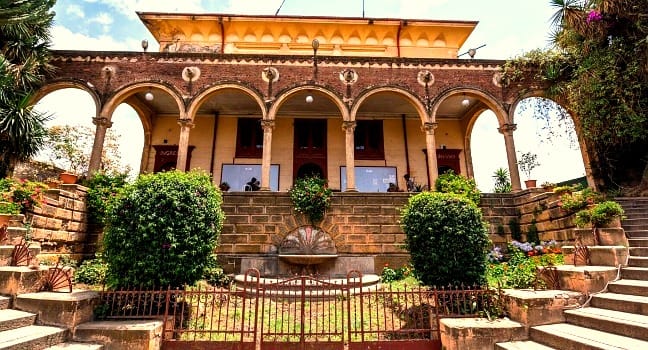
The Asmara Opera House at the heart of the city opened in 1918 and is one of the city's most elegant architectural gems. The building masterfully blends Romanesque Revival and Neoclassical styles. Its facade features a grand portico with Corinthian columns, while the interior boasts a stunning shell-shaped fountain in the courtyard and a beautifully preserved auditorium. The opera house hosts cultural performances, concerts, and events throughout the year at its Harnet Avenue home.
- 01Architecture:Romanesque Revival + Neoclassical
- 02Features:Shell-shaped fountain, battlements on Beleza Street, Corinthian columns
- 03Entry:Free for exterior viewing; performances require tickets
- 04Built:1918
Medebar Market
Medebar Market at the edge of the city centre is a vibrant shopper's paradise and one of the most fascinating markets in East Africa. Located in a historic quarter of Asmara, the market is famous for its skilled artisans who transform scrap metal, old car parts, and recycled materials into beautiful functional items. You'll find everything from hand-forged tools and recycled art to home-spun cotton garments, silver-plated wares, and locally ground spices.
- 01Best buys:Hand-forged tools, recycled art, local spices, traditional textiles
- 02Payment:Cash only (Eritrean nakfa)
- 03Best time:Morning before 11 AM
- 04Unique feature:"Recycling market": artisans repurpose everything
National Museum of Eritrea
The National Museum of Eritrea, housed in a former Italian colonial building at the centre of Asmara, showcases the rich cultural and archaeological heritage of Eritrea. The museum is divided into five main sections: natural history, medieval history, ancient Dahlak and Adulis, the war of liberation, and Eritrea's nationalities. Highlights include the 1-million-year-old Buya woman's skull (one of the oldest hominid fossils ever found), inscribed tombstones from the Dahlak Islands, and artifacts from the ancient port city of Adulis.
- 01Status:Access varies while reconstruction continues; we confirm opening status before every departure
- 02Top highlight:Buya woman's skull (1 million years old)
- 03Sections:Natural history, medieval history, ancient Dahlak and Adulis, war of liberation, nationalities of Eritrea
- 04Suggested time:1.5 - 2 hours
Enda Mariam Cathedral
Enda Mariam Cathedral is the main Orthodox Christian cathedral at the heart of the capital. Completed in 1938 on the site of an older Orthodox church, it has served the Eritrean Orthodox Tewahedo community ever since. Its design fuses Italian modernism with traditional Aksumite features (stepped towers, protruding "monkey-head" beam ends and large mosaic panels), and it dominates the skyline of central Asmara.
- 01Location:Central Asmara, near Harnet Avenue
- 02Style:Italian modernism with Aksumite elements
- 03Religious affiliation:Eritrean Orthodox Tewahedo Church
- 04Built:1938
Italian Cemetery (Cimitero Italiano)
The Italian Cemetery is a peaceful and beautifully maintained burial ground located just beyond St Michael's Church at the edge of Asmara. The site features an impressive collection of early 20th-century tombstones, mausoleums, and colonial-era funerary art. Many of the graves belong to Italian soldiers, colonists, and Eritreans who served in the Italian colonial administration.
- 01Location:Beyond St Michael's Church, Asmara
- 02Nearby:Asmara Theatre, Asmara Government Center
- 03Note:Quiet, respectful visit recommended
- 04Era:Mainly early to mid-20th century
Kidane Mehret Cathedral
Kidane Mehret Cathedral is a stunning Catholic cathedral designed in a unique blend of Romanesque and Neo-Romanesque styles at the height of the Italian period. Its most distinctive feature is the two-tone pink and white stone facade. The cathedral is active and welcomes visitors outside of mass times.
- 01Location:Viale Africa, Asmara
- 02Style:Romanesque / Neo-Romanesque
- 03Distinctive feature:Pink and white striped stonework
- 04Built:1920s
Asmara Bowling Alley
The Asmara Bowling Alley is a fascinating relic of the mid-20th century at the centre of town. Built during the US military era (when the US maintained a communications base at Kagnew Station near Asmara), the bowling alley has been preserved in nearly pristine condition. The single bowling pin sign outside has become an iconic landmark. The alley still opens for local league nights, though the hours are informal; we can check whether it is open during your stay and arrange a visit.
- 01Era:1950s US military era (Kagnew Station)
- 02Status:Still used for local league nights; informal hours, so we check before your visit
- 03Location:Near the center of Asmara
- 04Iconic feature:Single bowling pin sign
Local life and culture at street level
The Eritrean Coffee Ceremony
Coffee in Asmara is not just a drink: it is a social ritual at the heart of daily life. The ceremony can take up to an hour and involves three rounds of coffee served from a jebena (traditional clay pot). Women traditionally perform the ceremony, roasting green coffee beans over an open flame, grinding them with a mortar and pestle, and brewing the coffee with cardamom and sometimes cloves.
Macchiato at the counter
Alongside the traditional ceremony, Asmara kept the Italian espresso bar. A macchiato taken standing at a zinc counter in one of the Art Deco cafes on Harnet Avenue costs a few nakfa, arrives without ceremony and is drunk in three sips, and it is one of the clearest places you can still taste the Italian decades in ordinary daily life.
The evening passeggiata
Towards dusk, Harnet Avenue fills with people walking slowly in both directions, greeting each other, stopping, turning back. The passeggiata is inherited from the Italian era and it remains the city's main social event of the day: nobody is selling anything and nobody is in a hurry. Joining it is the simplest way to understand the pace of Asmara, and at 2,325 metres the evening air makes it a pleasure rather than an effort.
Traditional Eritrean Cuisine
The staple food at every Asmara table is injera, a large, spongy sourdough flatbread made from teff flour. Meals are served on a large communal platter with injera as the base. Popular dishes include zigni (spicy beef or lamb stew), dorho (chicken stew), shiro (chickpea puree), and a variety of vegetable and lentil dishes. Eating with your right hand is traditional at every meal.
Cinema Culture
Cinema-going remains a beloved pastime at any age in Asmara. The city has nine movie theaters, many of which date back to the 1930s and 1940s. These cinemas show a mix of international films (American, Indian, and European), Egyptian classics, and contemporary Eritrean productions. Most films have English or Arabic subtitles.
Traditional Eritrean music varies by ethnic group. At any gathering in Asmara, you can hear krar (lyre), kebero (drum), and masenqo (single-stringed fiddle) performances at cultural events and festivals. The vibrant nightlife scene includes modern Eritrean pop music as well as traditional styles.
Detailed itinerary: Two days at Asmara UNESCO World Heritage Site
Day one: Architecture and history
- 01Morning (9:00-11:00):Visit the Fiat Tagliero Building at the start of the day. Photograph the futurist wings from multiple angles. Read the UNESCO information plaque on site. Learn about architect Pettazzi's legendary standoff with workers during construction.
- 02Late morning (11:00-12:30):Walk to the Asmara Opera House at Harnet Avenue. Admire the Romanesque Revival and Neoclassical architecture. Find the shell-shaped fountain and the battlements on Beleza Street.
- 03Lunch (12:30-14:00):Enjoy a traditional Eritrean lunch of zigni (spicy stew) with injera at Alba Bistro or Asmara Palace Restaurant near the centre.
- 04Afternoon (14:00-16:00):Explore the vintage Bowling Alley and then visit Cinema Impero, one of Africa's finest Art Deco cinemas at its 1937 opening.
- 05Late afternoon (16:00-18:00):Travel to the Tank Graveyard located just outside Asmara. Any trip beyond the city needs an internal travel permit, which we arrange locally about a day before you leave the city. Walk among the abandoned T-55 Soviet tanks and American armored cars. This sobering site will give you perspective on Eritrea's 30-year war for independence.
- 06Evening (18:00 onwards):Return to the city center for an evening stroll along Harnet Avenue. Observe the blend of art deco villas and neo-Romanesque palaces as the sun sets. Consider dinner at a local restaurant.
Day two: Markets, museums and local life
- 01Morning (8:30-11:00):Arrive at Medebar Market at the edge of the centre early. Watch artisans transform scrap metal and car frames into functional tools and art. Purchase hand-forged souvenirs and ground spices from the dedicated spice-grinding section.
- 02Late morning (11:00-12:30):Experience a traditional coffee ceremony at a local café like Victory Café near Harnet Avenue at mid-morning. Observe the three rounds: awl (first, strongest), kale'i (second, moderately strong), and baraka (third, blessing, weakest).
- 03Lunch (12:30-14:00):Sample local street food or a casual restaurant at lunchtime. Try ful medames (fava bean stew) or sambusas (fried pastries filled with meat or lentils).
- 04Afternoon (14:00-16:30):If the National Museum of Eritrea at the city centre is open during your stay, allow 1.5 to 2 hours; access varies while reconstruction continues and we confirm it before every departure. Explore the five sections: natural history, medieval history, ancient Dahlak and Adulis, the war of liberation, and Eritrea's nationalities. Don't miss the 1-million-year-old Buya woman's skull.
- 05Late afternoon (16:30-18:00):Walk to the Italian Cemetery beyond St Michael's Church at the city's edge. Examine the early 20th-century tombstones and colonial architecture. Then visit Enda Mariam Cathedral and Kidane Mehret Cathedral at the end of the afternoon.
- 06Evening (18:00 onwards):End the day at the Asmara Theatre or Asmara Government Center, the city's main hub of activity at dusk. If you're lucky, catch a film at Cinema Impero or a live performance at the Opera House.
If you have a third day, consider exploring more of Asmara's 400+ modernist buildings at your own pace, or taking a guided tour of the former Kagnew Station (US military base). Alternatively, take a day trip to the ancient monastery of Debre Bizen (requires hiking and advance permission). Every trip outside Asmara also needs an internal travel permit; as a licensed Eritrean operator we apply for it for you, usually the day before you leave the capital.
Practical travel information for Asmara
Getting to Asmara is straightforward via Asmara International Airport, with connections through the Gulf and Cairo. The compact city centre is best explored on foot. Remember that an internal travel permit is required for any trip outside the capital (we apply for it locally, usually about a day in advance, as your licensed operator), that you will need US dollars in cash because cards are not accepted, and that modest dress is expected when visiting churches and mosques. Asmara's highland climate is mild all year, but we recommend October to March, when conditions are driest and most reliable for sightseeing.

Best time to visit Asmara
October to March
Dry, sunny, mild
15-22°C (59-72°F)
BEST FOR SIGHTSEEING
Clear skies, comfortable for walking at altitude

April to September
Warmer in April, light rain (afternoon showers) from May
Cooler evenings
12-20°C (54-68°F) in the rainy months
Fewer tourists, lush green landscapes at every turn
How to get to Asmara
Fly into Asmara International Airport (ASM), located just 4 km (2.5 miles) from the center.
Airlines: Asmara is reached via Cairo, Dubai and other regional hubs. Routes change from season to season, so ask us which connections are flying on your dates.
Visa required: Yes, for most nationalities. See visa section below. Learn more about UNESCO World Heritage Sites.
Getting around Asmara
Walking: Safest and best for the city center: most attractions are within walking distance.
Taxis: No meters, so agree the fare before you get in. Short trips around the city centre are inexpensive; your guide will tell you the going rate.
Buses: Very cheap (5-10 nakfa) but crowded, recommended for adventurous travelers.
Car rental: Available but not recommended for first-time visitors due to limited signage and checkpoints.
Where to stay at any budget
Luxury: Asmara Palace Hotel. Beautiful gardens, swimming pool, international restaurant
Mid-range: Crystal Hotel. Central location, reliable service, comfortable rooms
Budget: Local guesthouses: authentic experience and friendly hospitality in simple rooms at modest local rates. We book accommodation as part of every tour, so ask us for current prices
Currency and payments at a glance
The local currency is the Eritrean nakfa (ERN). Credit cards do NOT work in Eritrea: there are no ATMs that accept international cards. Bring enough USD or EUR cash and exchange locally at the airport or licensed exchange offices. US dollars are widely accepted in larger hotels and tour operators at the capital.
Visa information for Eritrea
You need a visa to enter Eritrea and visit Asmara. Travellers who hold a Letter of Invitation can be issued a tourist visa on arrival at Asmara International Airport for USD 70; the Letter of Invitation itself costs USD 50, so budget USD 120 in total, payable in cash. Adulis Travel prepares the Letter of Invitation for our clients as part of the booking, and the visa itself is issued by the Eritrean authorities. If you would rather apply in advance, an Eritrean embassy remains an alternative. Read our full Eritrea visa guide.
Connectivity at your hotel and beyond
Wi-Fi is available at major hotels and some cafes at the city centre but can be slow. Local SIM cards (Eritel) are available for purchase with a passport, but data coverage is limited to 3G/4G in Asmara only. Download offline maps and translation apps before arriving.
Check out our other guides: Massawa Red Sea coast | Danakil Depression | The Eritrean railway | Eritrea visa requirements
Frequently Asked Questions
Is Asmara safe for tourists?
Asmara is widely reported as one of the calmest capital cities in Africa, and our travellers routinely walk the centre in the evening. Violent crime against visitors is rare, but petty theft can occur in crowded markets, so normal street smarts apply. Modest dress is appreciated out of respect for local customs. As anywhere, check your own government's current travel advice before you book.
Do I need a guide to visit the Tank Graveyard near Asmara?
The Tank Graveyard lies outside the city boundary, so you need an internal travel permit to go there, as you do for any trip outside Asmara. The permit is applied for locally about a day before you leave Asmara, and Adulis Travel arranges it, along with a guide, for our clients. A guide also adds valuable historical context about the 30-year war, and the site is remote, so it is not a place to wander alone.
Can I take photos at the Fiat Tagliero Building at any time of day?
Yes, absolutely. It is located on a public street and is one of the most photographed buildings at the heart of Asmara. It's particularly beautiful at sunset. However, do not photograph military or government buildings: this is strictly forbidden.
What is the local currency and can I use credit cards at hotels and restaurants?
The currency is the Eritrean nakfa (ERN). Credit cards do NOT work anywhere at all. Bring enough USD or EUR cash for your entire stay. Exchange as needed at official exchange offices or your hotel.
How many days should I spend at Asmara UNESCO World Heritage Site?
At least two full days at a comfortable pace. One day for architecture (Fiat Tagliero, Opera House, Cinema Impero) and the Tank Graveyard, another day for markets (Medebar Market), museums (National Museum), and cultural experiences (coffee ceremony). With three days, you can add a day trip to nearby monasteries or explore more of the 400+ modernist buildings at a slower pace.
What language is spoken at home in Asmara?
Tigrinya is the most widely spoken language at every level of city life, followed by Arabic and Italian (among older generations). English is not widely spoken but is understood in hotels, tour operators, and some restaurants. Learning a few words of Tigrinya (Selam = hello, Yekanley = thank you) is appreciated.
Is tap water safe to drink at your hotel?
We recommend bottled water throughout your stay; it is widely available and inexpensive. Avoid ice in street vendors' drinks. For any health or vaccination questions, speak to a travel health clinic before you depart.
Continue exploring Asmara and the rest of the country in our Eritrea travel guide.
Plan your Eritrea trip with Adulis Travel
Read our complete Eritrea travel guide, browse related Eritrea tours, or request a private quote.
More Eritrea travel guides: Eritrea visa · is Eritrea safe? · attractions · Massawa · Danakil · the Eritrean railway · hiking around Asmara · Asmara and Massawa.